| |
|
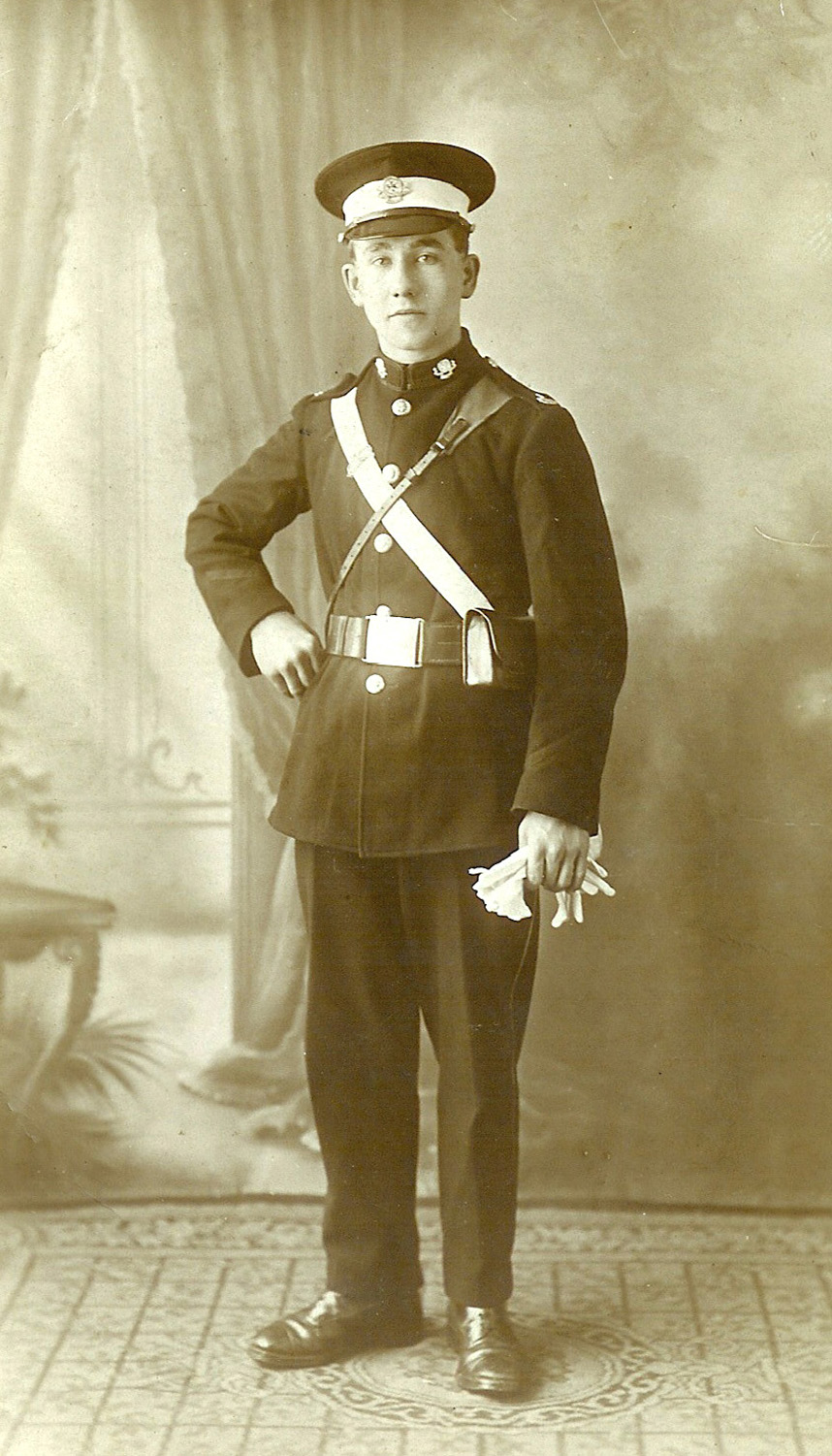
Fireman
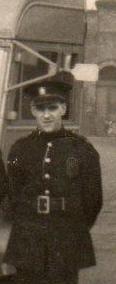
James Shelley
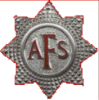
Auxiliary
Fire Service
Died: 2nd February 1940
James
Shelley was born in Litchfield in 1894 and at the age of
seventeen he enlisted with the 3rd South Staffordshire Regiment
Special Army Reserves in February 1912. In June of that
year he then enlisted in the South Staffordshire Regiment.
When
the First world war broke out he went to France as part
of the British expeditionary Force which was know as the
'Old Contemptibles'. The regular army adopted this title
themselves after the Kaiser of Germany referred to them
as a contemptible little army.
James
served on the Western Front and was transferred back to
the army reserve in April 1919. Lieutenant Colonel Davidson
described him on his discharge papers as "Hardworking, willing,
good tempered, honest and sober."
He
took up employment at Cannock chase Colliery where he became
a Coal Cutter Chargeman. He moved to Nottingham and on 8th
August 1928 where he married Adelaide Taylor. They had one
son and at that time were living on Dorset Street.
James
joined the Auxiliary Fire Service and attended many fire
calls both prior to the outbreak of the Second World War
and afterwards. It was following one protracted incident
where he had been soaked through by freezing cold water
for many hours that he fell ill. He deteriorated and doctors
diagnosed that he had pneumonia. He finally succumbed to
this on 2nd February 1940.
He
is officially recorded as having died due to illness contracted
on duty as a result of firefighting.
* * * * * * * * * * * * *
Back to top of page
|
|
|
| |
|
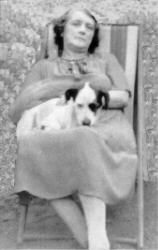
Ruth Willis
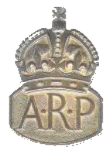
First
Aid Party Air Raid Precautions Service
Killed:
Laxton 28th August 1940
At 22:25
hours, six high explosive bombs fell in Laxton along with
two large calibre oil incendiary bombs and numerous one
kilogram incendiaries. Ruth Willis, was on duty as a member
of the Air Raid Precautions Service First Aid Party in Laxton.
She was
by her front door at The Old School House in the village
when the first bomb fell into her front garden. The shrapnel
killed Ruth, and seriously injured two other people from
the first aid party who were standing near where their ambulance
was parked. Damage was caused to several other houses, farm
buildings and the village school.
* * * * * * * * * * * * *
Back to top of page
|
|
|
|
| |
|
Herbert
Hill
Air Raid
Shelter Warden
Air Raid
Precautions Service
Died:
29th August 1940
When the air raid sirens
sounded over Nottingham on 28th August 1940, Herbert Hill,
who was one of the city’s Shelter Wardens, dashed from his
home in Sneinton Dale to unlock the air raid shelter for
the local people designated to use it. Such was his hurry
to get to the shelter that, as he ran across the road, he
was struck by a bus sustaining fatal injuries. He died on
29th August in Nottingham’s General Hospital and was the
second ARP Service member to die on duty since the start
of the war.
The raid claimed the lives of six people in all.
* * * * * * * * * * * * *
Back to top of page
|
|
|
|
| |
|
William
Dainty
Rescue
Party
Air Raid
Precautions Service
Fatally
injured: 1st September 1940
The air raid sirens sounded
the alert in Nottingham on 1st September 1940 and William
Dainty responded to the call to duty. He was knocked down
by a motor car in the blackout as he made his way to his
ARP Rescue Party Station and died of his injuries that night
at Nottingham General Hospital. He was the third person
from the civilian services to die on duty during the three
raids in five days on Nottingham.
* * * * * * * * * * * * *
Back to top of page
|
|
|
| |
|
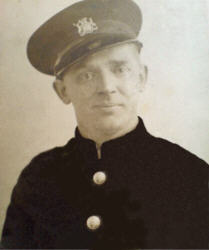
Fireman
Clifford Fardon
Auxiliary
Fire Service
Fatally injured: Coventry 14th November 1940
An air
raid on Coventry on 14th November 1940 become infamous
for the level of destruction caused to the city.
Assistance
was called for from other regions and fire pumps and crews
from Nottingham were sent to help the hard pressed Coventry
firemen. One of the Nottingham crews was fire fighting
when a high explosive bomb fell right next to them. The
crew were stunned by the blast and when they came to;
they found that Fireman Fardon was seriously injured.
Fireman
William Chadwick described the scene. "Fireman Fardon
was right next to me when the bomb fell and it was a terrible
bang. You could have put a bus into the crater it left.
Why the rest of us escaped serious injury I shall never
know. We all got up after the explosion, but he couldn't,
poor devil. I think he was unconscious and his leg was
all smashed up with the bone sticking out." Fireman Fardon
was placed into the care of an ambulance crew and he was
taken to Rugby Hospital.
The crew
then turned their attention back to the task of firefighting.
Their towing vehicle and equipment had been damaged by
the explosion, but worst of all their trailer pump had
been put out of action completely. At this stage, they
could perhaps have been forgiven for deciding there was
nothing they could do to help and in fact they would have
been justified in finding a first aid post and getting
their injuries seen to. Instead, they searched around
until they found another trailer pump that had been abandoned
by its crew. The reason quickly became obvious because,
just like their own, it would not work. They eventually
got the engine to start, found a water supply from a fire
hydrant and recommenced the job they had been sent to
do; put fires out.
The following
day, the crew learned that Fireman Fardon had died of
his injuries at Rugby Hospital. The crew received praise,
from Herbert Morrison the Home Security Minister. He sent
each of them a letter which said: "Your devotion to duty
was deserving of high praise. I have pleasure in informing
you that his majesty has been graciously pleased to give
orders for the publication of your name as having received
an expression of commendation of your services" As a result
of this King's Commendation, they were entitled to wear
a Silver Oak Leaf on the ribbon of their Defence Medal.
* * * * * * * * * * * * *
Back to top of page
|
|
|
| |
|
Fireman
Philip Smith
Auxiliary
Fire Service
Killed:
Nottingham 17th December 1940
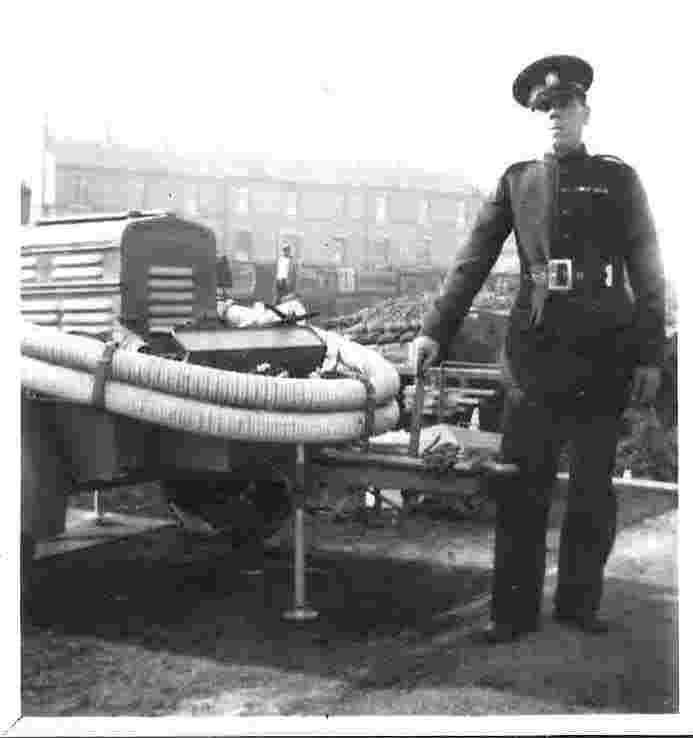
Philip was part of a crew
that had been called out to an incident on 17th December
1940. The vehicle they travelled in was a large car which
pulled a trailer pump and carried other equipment strapped
onto the roof. It was common for some of the crew to ride
on the outside of the vehicle by standing on the running
boards and holding on to the vehicle through an open window.
Phillip was in one of these riding positions when the offside
of the vehicle collided with a street air raid shelter in
Manvers Street, Nottingham. The headlights of the vehicle
were masked so as not to show any light during the blackout
and there was only a thin slit of light about the width
of a pencil emitted to light the road ahead. The driver
of the vehicle thought that all the street air raid shelters
were on the opposite side of the road but he was mistaken
in this and he did not see the shelters until it was too
late.
* * * * * * * * * * * * *
Back to top of page
|
|
|
| |
|
Firemen
Raymond Burrows, Joe Wright, Alan Day,
Albert Cooke.
Auxiliary
Fire Service
Killed: Manchester,
23rd December 1940
An eleven
hour air attack was carried out on Manchester by 270 aircraft.
The aircraft dropped 272 tonnes of high explosive bombs
and 37,152 incendiaries on Manchester alone.
The firemen
had an insurmountable task to control over 400 fires that
were consuming entire blocks of buildings. Three Nottinghamshire
firemen from Kirkby, Raymond Burrows, Joe Wright, and Alan
Day, were killed on 23rd December during the raid.
Their
final resting place
Manchester
was attacked again that night and the Luftwaffe crews could
see the glow that was Manchester from as far away as London.
171 enemy aircraft bombed the city for five hours, unleashing
195 tonnes of high explosive bombs and another 7,000 incendiaries.
During the raid, another of Nottinghamshire's firemen, Albert
Cooke, was seriously injured and after being treated in
hospital at Manchester, he was returned home. He subsequently
died of his injuries.
* * * * * * * * * * * * *
Back to top of page
|
|
|
|
|
| |
|
Claude
Martin
First
Aid Party
Air Raid
Precautions Service
Killed:
Newark 7th March 1941
A daring daylight raid
on the Ransome and Marles Factory in Newark took place in
the early afternoon of 7th March 1941. Ten high explosive
bombs were dropped on the factory during four low level
runs across the site. Five of the bombs detonated and five
failed to explode. It was said afterwards that they were
dropped from such a low altitude that the mechanism for
detonating the bombs did not prime properly. The third run
across the site resulted in factory workers and Civilian
services at the scene being strafed by machine gun fire.
Claude Martin was one of the 41 people killed that afternoon.
Another 165 were injured and the factory, vital to the war
effort, was badly damaged.
This was a dark day in Nottinghamshire’s home front war.
* * * * * * * * * * * * *
Back to top of page
|
|
|
| |
|
Henry
Gill

Firewatcher
National
Fire Service
Killed:
Meadow Lane, Chilwell 9th May 1941
Henry Gill was a Firewatcher
for the warehouse of the Allied Suppliers, a food distribution
company evacuated out of London. There had been a number
of air raid alerts in the weeks leading up to the air
raid on 8th / 9th May 1941 and on that particular night,
the Gill family did not leave their cottage immediately
to go into the air raid shelter which had been especially
built for the warehouse staff. As the raid developed,
Henry Gill ushered his wife Catherine and his granddaughter
Peggy into the garden of the large house where the air
raid shelter was situated. They heard a number of bombs
whistling as they fell and Henry pushed his wife and granddaughter
to safety either side of a porch. He caught the full blast
of one of the bombs and was fatally injured. His granddaughter
Peggy found him alive but dying on the lawn of the house.
She was taken away to a first aid post along with her
grandmother and later heard that Henry had died.
* * * * * * * * * * * * *
Back to top of page
|
|
|
| |
|
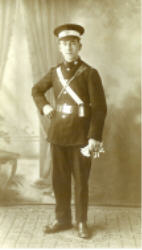
Cyril
Theaker
First
Aid Party Air Raid Precautions Service
and
Charles
Gooding
Air Raid Warden Air Raid Precautions Service
Killed:
Nottingham 8th May 1941
107 aircraft
were assigned to raid Nottingham.
During the raid, one 'stick' of bombs fell in a line from
Kentwood Road to Lichfield Road in Sneinton. A shop was
wrecked on the corner of Port Arthur Road and the gas main
in the street was blazing fiercely.
In Baden
Powell Road, four men were out in the street when a bomb
fell. Charles Gooding, the ARP warden, Cyril Theaker a member
of the first aid party as well as a fire watcher, Cyril
Parkes and a nineteen year old soldier, Joseph Murquis.
The blast killed Gooding, Murquis and Theaker.
Cyril Parkes
was seriously injured and suffered from ill health for over
forty years due to his injuries.
* * * * * * * * * * * * *
Back to top of page
|
|
|
|
| |
|
John
Addis and George Morris
First
Aid Party
Air Raid
Precautions Service
William
Daubney, Frank Howman and Albert Keetley
Air
Raid Wardens
Air
Raid Precautions Service
Eric
Saunders
Firewatcher
National
Fire Service
Killed:
Co-op Bakery, Meadow Lane, Nottingham 9th May 1941
The heaviest air raid on
Nottingham and its surrounding districts during the Second
World War occurred on 8th and 9th May 1941. Scores of high
explosive bombs fell across the River Trent in West Bridgford
and also in Colwick, Sneinton and the City. The Co Operative
Bakery took three direct hits, one of which penetrated the
roof of the air raid shelter in the basement of the factory
and another one entered the factory at the base of the ground
floor wall which caused all the floors above to collapse
into the basement. A fierce fire was caused and it was some
weeks later when the rescue teams recovered the last body.
Some of the victims were never formally identified.
A total of 49 people were
killed including John Addis and George Morris both of whom
were members of the factory first aid party. William
Daubney, Frank Howman and Albert Keetley all of whom were
Air Raid Wardens at the Co-op. Also killed was Eric Saunders
who was one of the two Firewatchers on duty at the bakery
that night. His colleague, Fred Kummer, survived by a quirk
of fate even though he was just a few feet away from him
at the time of the explosion.
This was the highest loss of life recorded
in a single incident in Nottinghamshire.
* * * * * * * * * * * * *
Back to top of page
|
|
|
|
| |
|
Charles
Brown
Air Raid
Warden
Air
Raid Precautions Service
Killed:
Carlton 9th May 1941
Nottingham endured a sustained
bombing attack on 8th and 9th May 1941. Charles Brown, an
Air Raid Warden, was carrying out his duties at the Junction
of Parkdale Road and Oakdale Road. A stick of high explosive
bombs fell in the area, one of which killed Charles. By
chance, his boyhood friend, Fred Shipley who was a fireman,
was also struck by the blast from the same bomb, but survived.
* * * * * * * * * * * * *
Back to top of page
|
|
|
|
| |
|
William
Blackford
Air Raid
Warden
Air
Raid Precautions Service
Died: Nottingham 9th May 1941
The air raid
on Nottingham on 8th and 9th May 1941 was not the first
time William Blackford had been under aerial bombardment,
he had been in action several times since August 1940. On
15th January 1941 he was one of the wardens who dealt with
extensive property damage and also casualties during a raid
on Carlton and Sneinton. A house on the corner of Florence
Road where he lived was damaged in the January raid. During
the heavy raid in May 1941 he was outside number 35 Florence
Road when he was fatally injured by a high explosive bomb.
He died later the same day at the Wells Road First Aid Post.
* * * * * * * * * * * * *
Back to top of page
|
|
|
|
|
|
Dorothy
Coulson
Firewatcher
National
Fire Service
Killed: Dakeyne Street 9th May 1941
During an air raid on the
night of 9th May 1941, the sky around Dakeyne Street was
lit up by huge fires burning in factories and other buildings
on Manvers Street and Newark Street. Many high explosive
bombs were dropped in this area and one of them penetrated
into the underground air raid shelter of Black’s Factory.
Dorothy Coulson was amongst the twenty one people killed
and she became the second of the two women from the civilian
services to be killed in Nottinghamshire during the Second
World War.
* * * * * * * * * * * * *
Back to top of page
|
|
|
|
| |
|
William
Daykin
Firewatcher
National
Fire Service
Killed:
Boot’s Printing Works, Nottingham 9th May 1941
The Boot’s printing works
on Station Street in Nottingham was one of several buildings
in the south east part of the city to be struck by high
explosive bombs during a heavy air raid on the night of
9th May 1941. The Boot’s Island Street works also received
direct hits and there were many casualties caused. Buildings
were ablaze and four people were missing in the rubble of
the printing works. Firemen and Rescue workers tried to
find the missing people but it took several days before
the last body was recovered. He was a 16 year old lad called
Derek Needham and the day he was found would have been his
17th birthday. Three other fatalities had already been recorded;
Eric Sedgewick, Harold Towle and William Daykin who was
a Firewatcher at the works.
* * * * * * * * * * * * *
Back to top of page
|
|
|
|
| |
|
Alfred
Sabin
Firewatcher
National
Fire Service
Killed:
Edale Road 24th July 1941
On a cloudy July night bombers
attacked, their target was thought to be the railway bridge
on Sneinton Dale at the Edale Road junction. A number of
high explosive and incendiary devices were dropped damaging
the Dale Cinema, and the Edale Road School. As Alfred Sabin,
a Firewatcher, took shelter in the doorway of the cinema,
the blast from one of the bombs propelled the stump of a
spiked railing from the school across the road. It struck
him in the throat, killing him instantly
* * * * * * * * * * * * *
Back to top of page
|
|
|
| |
|
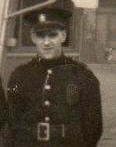
Fireman
John Tyers

National
Fire Service
Fatally
injured: Ollerton 4th November 1941
John Tyers
was a French Polisher by trade and he joined the Auxiliary
Fire Service before the Second World War.
In September
1939 he was called up as a full time member of the fire
service and was stationed at Eastcroft Fire Station which
was off London Road, Nottingham. John was involved in fire
fighting during the Blitz of 1940 and 1941 in Cities and
Towns all over the country. On May 8th and 9th 1941, Nottingham,
West Bridgford, Colwick, Carlton and Beeston were heavily
raided. John reported for duty when the air raid sirens
went and when he did not return home again the next day,
his wife Mary tried to find what had happened to him. She
eventually found him on 10th May along with other fire crews
at the rubble that had once been the Co-Operative Bakery
in Meadow Lane, Nottingham. We can only imagine Mary's relief
when she found her husband alive.
In August
1941, the National Fire Service was formed and this absorbed
all the fire services in the United Kingdom, including the
Auxiliary Fire Service. As well as his role as a fireman,
John was also a dispatch rider and he regularly took messages
all over the country, including Bletchley Park which was
a centre for intelligence gathering during the war. John
would sometimes be away for two or three days at a time
whilst working as a dispatch rider.
On 4th
November 1941, John was carrying messages and he rode his
motorbike down the A614. As he reached the roundabout at
Ollerton, a lorry collided with him and John died of a fractured
skull. He was the first member of the National Fire Service
to be killed on duty in Nottinghamshire.
Mary Tyers
was left to bring up her two daughters aged seven and two
as best she could.
She struggled for a long time on a pension of £0.4s.3d.
(21p) and had to work hard just to make up the deficit of
the 10 shillings (50p) per week rent that she had to find.
John was 30 years old when he died and is buried in Carlton
Cemetery.
* * * * * * * * *
* * * *
Back
to top of page
|
|
|
|
| |
|
Leading
Fireman Albert Cooke
National
Fire Service
Died of
injuries: Nottingham, 11th November 1941
Albert Cooke was seriously
injured whilst firefighting during an eleven hour air raid
on Manchester on 23rd December 1940. Three of his Auxiliary
Fire Service colleagues were killed during the raid. After
hospital treatment, Albert was returned home to Nottingham.
He was transferred to the newly formed National Fire Service
in August 1941, but was never well enough to return to duty.
He subsequently died of his injuries at home in Beeston
on 11th November 1941.
* * * * * * * * * * * * *
Back to top of page
|
|
|
|
| |
|
John
Bramman
Firewatcher
National
Fire Service
Died:
31st August 1942
John Bramman lived at 44
Miall Street and was a firewatcher at premises in Miall
Street, Radford. The regulations governing Firewatchers
required them to be on duty at the premises they were guarding
even when there was no air raid alert in force. John was
on duty on Sunday 30th August when he sustained injuries
from which he died the following day at Nottingham General
Hospital
* * * * * * * * * * * * *
Back to top of page
|
|
|
|
| |
|
Arthur
Kirchin
Firewatcher
National
Fire Service
Died:
17th May 1943
Arthur Kirchin was on
duty as a firewatcher on 14th May 1943 at Premises on
Castle Gate in Nottingham. He was injured and was taken
to the Nottingham General Hospital where he subsequently
died three days later.
* * * * * * * * * * * * *
Back to top of page
|
|
|
|
|
| |
|
Leading
Fireman Henry Offler
National
Fire Service
Died:
Annesley 18th May 1943
Leading Fireman Henry
Offler lived on Papplewick Lane in Linby and on 18th May
1943 he died from injuries received due to enemy action
at Annesley Park. Enemy aircraft were still very active
over the country in 1943 and Nottinghamshire crews were
regularly sent as regional reinforcements to other areas
hit heavily by air raids. One such example of this was
the major raid on Grimsby and Cleethorpes in June 1943
which saw large number of the deadly butterfly bombs used
for the first time. They were intended to kill civilians
and in particular, members of the National Fire Service
and Civil Defence Service who were dealing with the effects
of air raids.
* * * * * * * * * * * * *
Back to top of page
|
|
|
|
|
| |
|
Section
Leader Edwin Freeman
National
Fire Service
Fatally
injured: Edwinstowe 28th April 1944
Edwin Freeman was a Section
Leader and also a dispatch rider with the National Fire
Service. On 28th April 1944, Edwin was mobilised to a
report of a barn being on fire which was thought to be
due to enemy action (incendiary bomb). The Country was
still under black out conditions in 1944 and Edwin was
involved in an accident which involved some American armoured
vehicles which were on manoeuvres at the time. Edwin died
as a result of a fractured neck. He was the 9th member
of the Fire Service to be killed on duty in Nottinghamshire
since the start of the war. (The fire in the barn had
actually been started by children).
Edwin had been well known in Nottinghamshire before the
war due to his skill in motorcross riding, he was known
as ‘Tiger Freeman’.
* * * * * * * * * * * * *
Back to top of page
|
|
|
|
|
| |
|
Company
Officer John Goldrick
National
Fire Service
Died:
Nottingham 27th January 1945
A fire appliance from Hyson
Green Fire Station (situated at the side of St Leodegarious
Church at the bottom of Alpine Street) was mobilised to
a fire call. John Goldrick was the officer in charge of
the appliance and he would have been the equivalent rank
of the more modern day Station Officer (Present
day equivalent of Watch Manager).
Whilst on the way to the call, John collapsed and died.
It was subsequently established that the call had been a
hoax.
* * * * * * * * * * * * *
Back to top of page
|
|
|
|
|
| |
|
Fireman
William Birch
National
Fire Service
Died:
Nottingham 12th February 1945
William Birch was a one
of many National Fire Service personnel from Nottinghamshire
who had been moved to the south of the country during 1944
and 1945. The crews provided additional fire cover for the
large camps of American and British Troops and also the
huge ammunition and other supplies depots that had been
built up. Enemy activity from the air was still a threat,
particularly the V1 and V2 Flying Bombs. William Birch was
seriously injured at Birdham in Sussex by enemy action on
15th July 1944, which was just 5 weeks after D–Day. He was
eventually transferred back to Nottingham where he died
of his injuries seven months later at his home.
* * * * * * * * * * * *
Back to top of page
|
|
|
|
|
| |
|
Ronald
Ross

Air Raid
Warden & Instructor
Civil
Defence Service
Died: West Bridgford 28th May 1947
Ronald Ross died at his
home in Mona Road of an illness caused by injuries received
during an air raid. Although there is only a small amount
of information about this, it is likely that the air raid
that caused his injuries was the one that took place on
8th / 9th May 1941 when West Bridgford was heavily bombed.
An entire area, including Trent Boulevard, Holme Road, Julian
Road, Gertrude Road, Mona Road and Pierrepont Road was struck
by both high explosive and incendiary bombs causing casualties
and extensive damage.
* * * * * * * * * * * * *
Back to top of page
|
|
|
|
|
| |
|
Fireman
Henry Swanwick
National
Fire Service
Died:
Nottingham 23rd October 1947
Henry Swanwick was a Fireman
in the National Fire Service and he was based at Kimberley
Fire Station. On 1st January 1946, he was seriously injured
by a fire engine which was being manoeuvred at the time.
He did not recover from his injuries and died in Basford
County Hospital in Nottingham over 18 months later. Henry
was the last member of the National Fire Service to die
in Nottinghamshire as the National Fire Service was disbanded
and returned to local authority control in April 1948
* * * * * * * *
* * * * *
Back
to top of page
|
|
|
| |
|
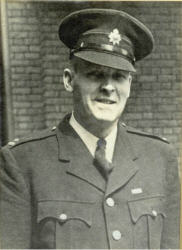
Divisional
Officer Frank Bennett
Nottingham
City Fire Brigade
Fatally
injured: Nottingham 5th November 1948
On
5th November 1949, the city brigade were kept busy attending
bonfires that had got out of control and other fires that
had been caused by sparks from bonfires or fireworks.
A
call was received at the Brigade control room stating that
Wall's Ice Cream Factory on Castle Boulevard was on fire.
Upon
arrival fire crews could see no obvious signs of fire. A
ladder was pitched to the flat roof of the factory so that
a check could be made on the rear of the premises. Firemen
Chris Raybould accompanied Frank Bennett onto the roof and
they established it was a false alarm. They could not be
sure however, whether it was a malicious call made by some
one who knew there was no fire, or whether the call was
made with good intent by someone mistakenly thinking the
building was on fire. They went back towards the ladder,
but Frank Bennett made a fatal mistake. He accidentally
stepped off the edge of the roof and crashed to the ground
landing on the base of his spine; this caused him to fracture
his skull. He was rendered unconscious immediately.
The
fire crew were able to get down to him as he lay in the
rear yard of the factory and sent a message back to their
control room requesting an ambulance. Frank was taken to
the Nottingham General Hospital where he died three days
later having never regained consciousness.
Chris
Raybould believed that Frank mistakenly thought that the
roof stretched further than it did. This illusion was created
by the very high wall at the rear of the factory which cast
a shadow over the entire roof area. In the darkness, this
shadow looked solid as if it was part of the roof. Frank
Bennett had survived fire fighting in the blitz and had
escaped with minor injuries when a bomb fell directly opposite
his house in Charlbury Road, but fate played a trick when
his luck ran out at a false alarm.
Anyone
who knew Frank described him as a gentleman and the firemen
respected him as a very capable and fair officer.
* * * * * * * * * * * * *
Back to top of page
|
|
|
| |
|
Station
Officer Albert Smith
Nottingham
City Fire Brigade
Killed:
Nottingham 16th January 1969
The brigade
were called to Dakin's warehouse on Talbot Street at 02:35
and Station Officer Albert Smith was in charge of the first
crews to arrive.
Fifteen
pumping appliances, two turntable ladders an emergency tender
and the control unit attended the fire.
During the
four hour struggle to control the fire, Albert Smith was
found collapsed in the street. He was taken to the Nottingham
General Hospital, but was confirmed dead.
Bob Nurcombe,
a leading Fireman with the City Brigade, saw Albert at around
02:50 whilst he was still directing the firefighting operation.
"He had been in the building, but when I saw him he had
come out. I got the impression that he was suffering from
the effects of the smoke. He had just about had it."
The news
of Station Officer Smith's death had a profound effect on
the men still tackling the blaze. Divisional Officer Ted
Cowling said: "…this fire was one of the most hazardous
that we have had for some considerable time. In the incipient
stages when Station officer Smith was in charge, it must
have been quite strenuous for him, but it was due to his
efforts that the fire was brought under control quickly
and with no further loss of life."
* * * * * * * * * * * * *
Back to top of page
|
|
|
| |
|
Leading
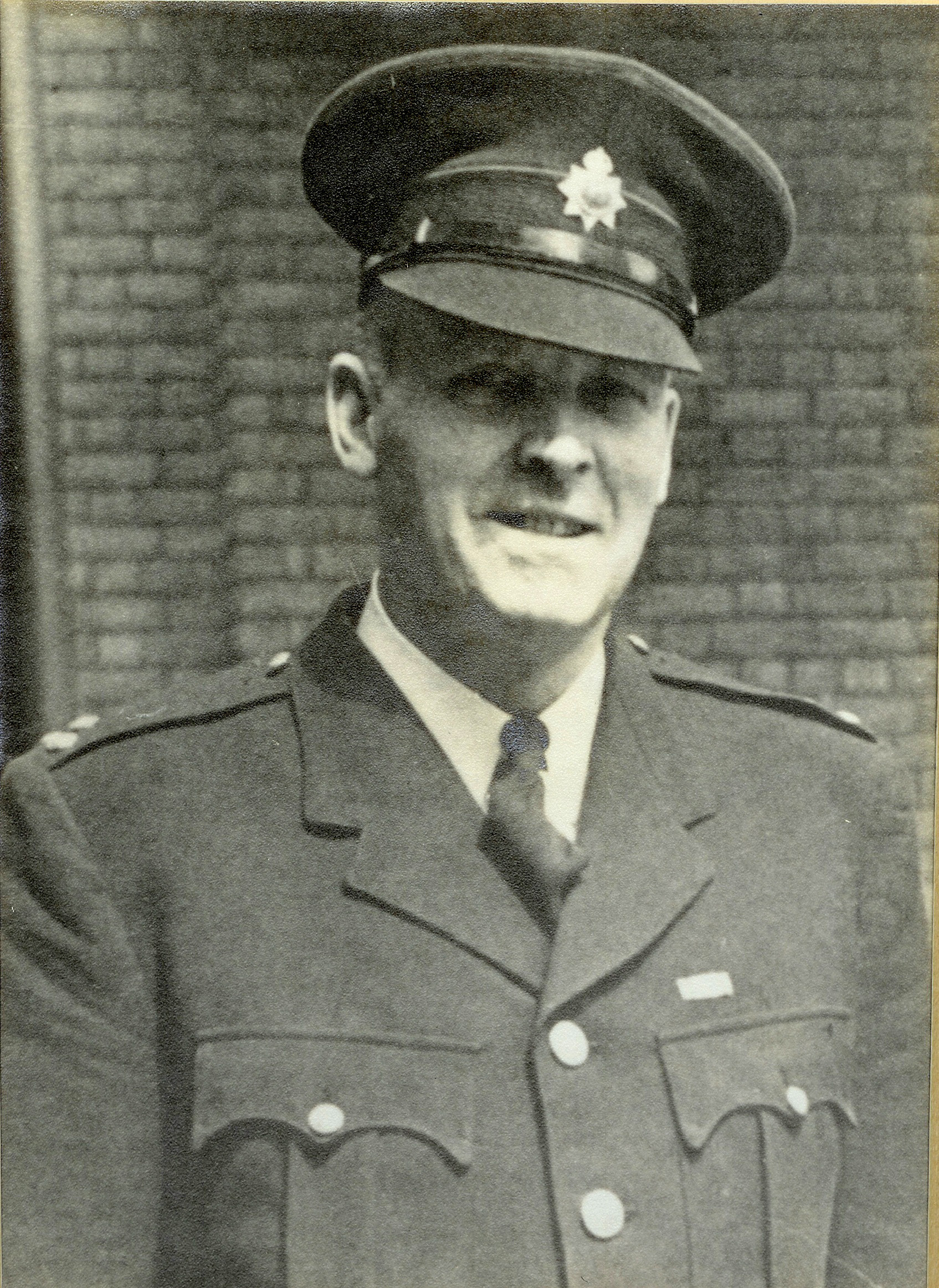
Firefighter Philip Hunsley
Nottinghamshire
Fire and Rescue Service
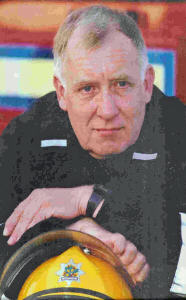
Died:
East Leake 24th March 1998
Philip Hunsley was a very
community minded person and believed in serving the public.
The fire station in East
Leake, where Philip lived, were recruiting part time firefighters
in 1988 and it was no surprise to Philip's family that he
enrolled to become a retained firefighter. Philip was just
completing his basic training in January1989 when the Kegworth
air crash occurred. The fire appliance from East Leake was
mobilised to the incident, but Philip was not able to attend.
He was frustrated by this, but it showed him just exactly
what being a firefighter was about and spurred him on to
contribute to a service that was held in high esteem. In
1998, Philip had been promoted to Leading Fireman and was
approaching his 55th birthday. He knew that it was obligatory
for him to retire, but he wanted to continue to serve, and
asked for permission to extend his service by six months
so that he could assist with training new recruits at East
Leake. The Chief Fire Officer granted the permission and
Philip was pleased that he would have a final six months
of public service. On 24th March 1998 he was at the fire
station in East Leake with other members of the crew undertaking
training to rescue people trapped in Road Traffic Collisions.
The training had gone well and just before 21:00 hours,
they re-stowed the equipment that had been used and removed
their fire kit. A few minutes later and without any warning,
Philip suddenly collapsed. The fire crew immediately suspected
a heart attack. They called an ambulance and began a resuscitation
attempt on Philip. Using the oxygen resuscitator from the
fire appliance and carrying out chest compressions, they
worked on Philip until the ambulance crew arrived. Philip's
wife and son arrived at the station and they could see that
he everyone was doing all they could to resuscitate him.
Philip was conveyed to
the Queen's Medical Centre in Nottingham by ambulance and
he was pronounced dead on arrival. It was subsequently confirmed
that he had died of a Myocardial Infarction (heart attack).
He had died just one week before his 55th birthday when
he could have retired. Philip was cremated and his ashes
were scattered by his family at Spurn Point on the East
Coast which were his wishes. Spurn Point was a favourite
spot for Philip where he indulged his other great passion
- bird watching. Philip is still well remembered in the
village as his commitment to public service.
* * * * * * * * * * *
* *
Back to top of page
|
|
|
| |
|
Firefighter
James Quickenden
Nottinghamshire
Fire and Rescue Service
Died:
East Midlands Airport 22nd March 1999
James was a Firefighter
at East Midlands Airport and when he was not on duty there,
he was a Retained Firefighter at Carlton Fire Station
in Nottingham. He had been on an aviation firefighting
course on Teeside for three weeks and unfortunately contracted
a chest infection. When he returned to duty at the Airport,
he was taking part in physical training and he collapsed
and died due to the exertion in combination with his chest
infection.
* * * * * * * * * * * * *
Back to top of page
|
|
|
We are indebted to the families
who have provided the insight into the life of those that we wish
to honour.
Many of these accounts are taken
from David Needhams book "Battle of the Flames", others
have been given to us as a result of the publicity created by the
memorial appeal.
|
|
web master Alan Yeo
July 5, 2022
©Nottinghamshire Firefighters Memorial 2013
|